Missed Calls Are Costing You More Than You Think
You already track the costs that hit your bottom line. Payroll. Materials. Fuel. Overhead. But there's one cost most home service owners never put a number on, and it might be the biggest one of all.
Missed calls.
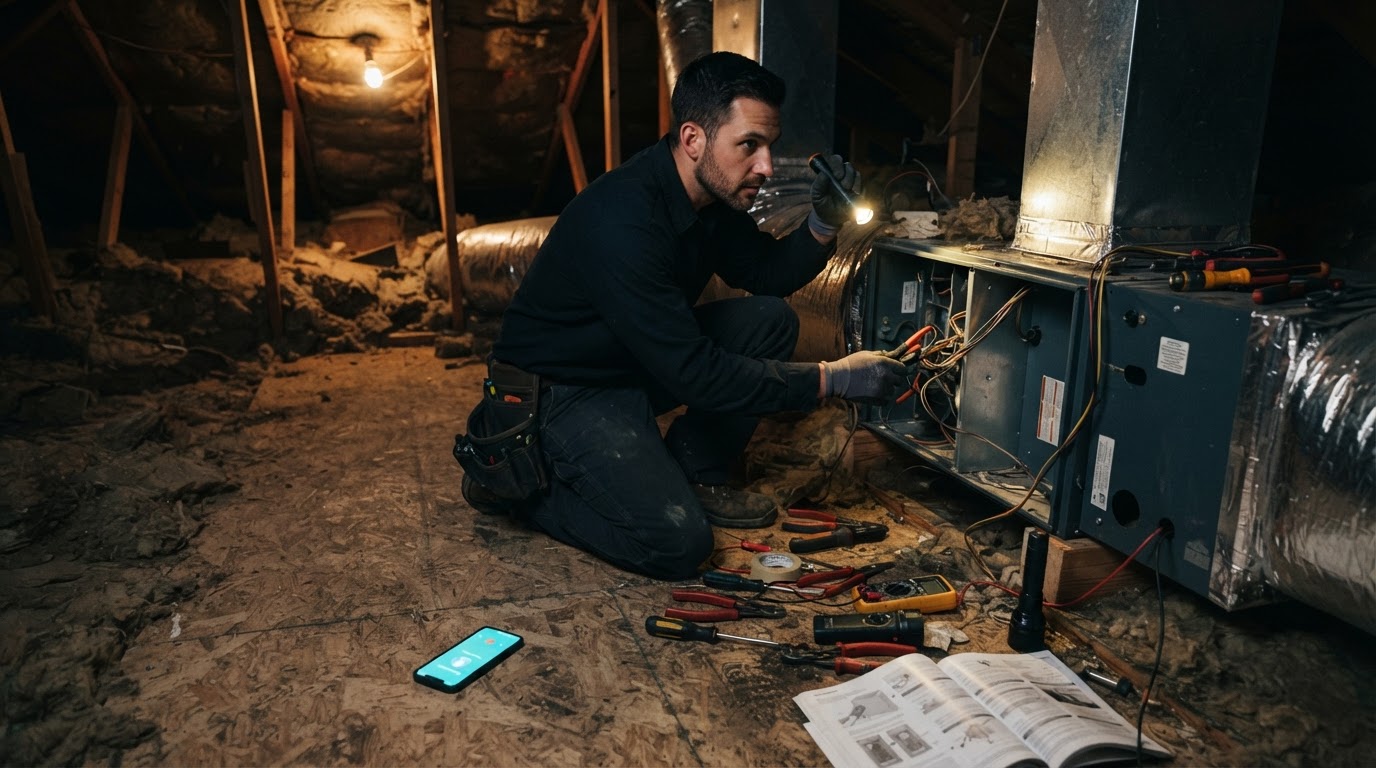
Picture it. Your phone rings, but you're up on a roof or knee-deep under a sink. You let it go, figuring you'll call back later. By the time you do, they've already booked someone else.
Sound familiar? You're not alone. According to Invoca, home service businesses miss around 27% of their inbound calls. That's nearly a third of your potential work slipping away while your hands are full.
What a Missed Call Actually Costs You

You can't be glued to your phone. Between running jobs and managing your crew, there's no way to catch every call. And during your busy season, it only gets worse.
But those missed calls are the difference between a booked job and a customer who moves on. Here's how they hurt you.
Lost Revenue
Every unanswered call is a job you didn't book and money you didn't make. Invoca puts the average revenue lost per missed call at around $1,200.
And it's bigger than one job. It's the lifetime value of that customer. The repeat work. The referrals to their neighbors. In an industry that runs on word of mouth, one missed call can cost you far more than the ticket in front of you.
A Hit to Your Reputation
A missed call doesn't just cost you a job. It tells the customer you're too busy or too unreliable to handle their problem.
People decide fast. One bad first impression, and they're already dialing the next name on the list. Then they leave a review about it, and now it's costing you future customers too.
Wasted Time
Then there's the phone tag. The voicemails. The callbacks that go nowhere.
Your time is worth money. Chasing down missed calls is a drain on it. That time is better spent doing the work or growing the business, not playing catch-up with people who already hired someone else.
So How Do You Fix It
Most owners try to muscle through it. Answer what you can, hire a front desk person, or just accept the losses as part of the job.
Hiring helps, but it's a full-time salary, plus training, sick days, and vacation. And even then, calls still slip through after hours and on weekends.
There's a simpler way. Stop choosing between doing the work and answering the phone.
Let Your Front Office Run Itself

Here's the shift. When you can't pick up, the caller still gets a text back in seconds. Your calls get answered. Jobs get booked straight onto your calendar, day or night, weekends and holidays included.
You don't learn a new app. You don't hire and train another employee. We build it, install it, and run it for you. You just show up and do the work you're good at.
That's the whole idea. A co-pilot for your front office, so no call goes unanswered and no job walks out the door.
See What You're Losing
Not sure what missed calls are costing you? Run the numbers and find out your real revenue leak with our Revenue Leak Calculator.
Then, when you're ready to plug it, book a quick demo and we'll show you exactly how it works.
Stop losing jobs to missed calls.
Get a done-for-you Client Concierge Service.
Questions
How much does a missed call cost a home service business?
It depends on your close rate and average job value. Invoca puts the average revenue lost per missed call at around $1,200, but the real cost can be higher when you count repeat work and referrals.
What percentage of calls do home service businesses miss?
According to Invoca, home service businesses miss around 27% of their inbound calls. That's nearly a third of potential work slipping away.
How can I stop missing calls while I'm on a job?
Set up missed call text back so every caller hears from you in seconds, and use call answering or an AI receptionist so calls get picked up and booked when you can't grab the phone.
Do I need to hire someone to answer my phone?
Not necessarily. A done-for-you answering setup can cover your calls day or night, weekends and holidays, without the salary, training, and time off that come with a full-time hire.